
Kâniyâsihk Culture Camps: Exploring Indigenous Land-Based Teachings | EP. 10
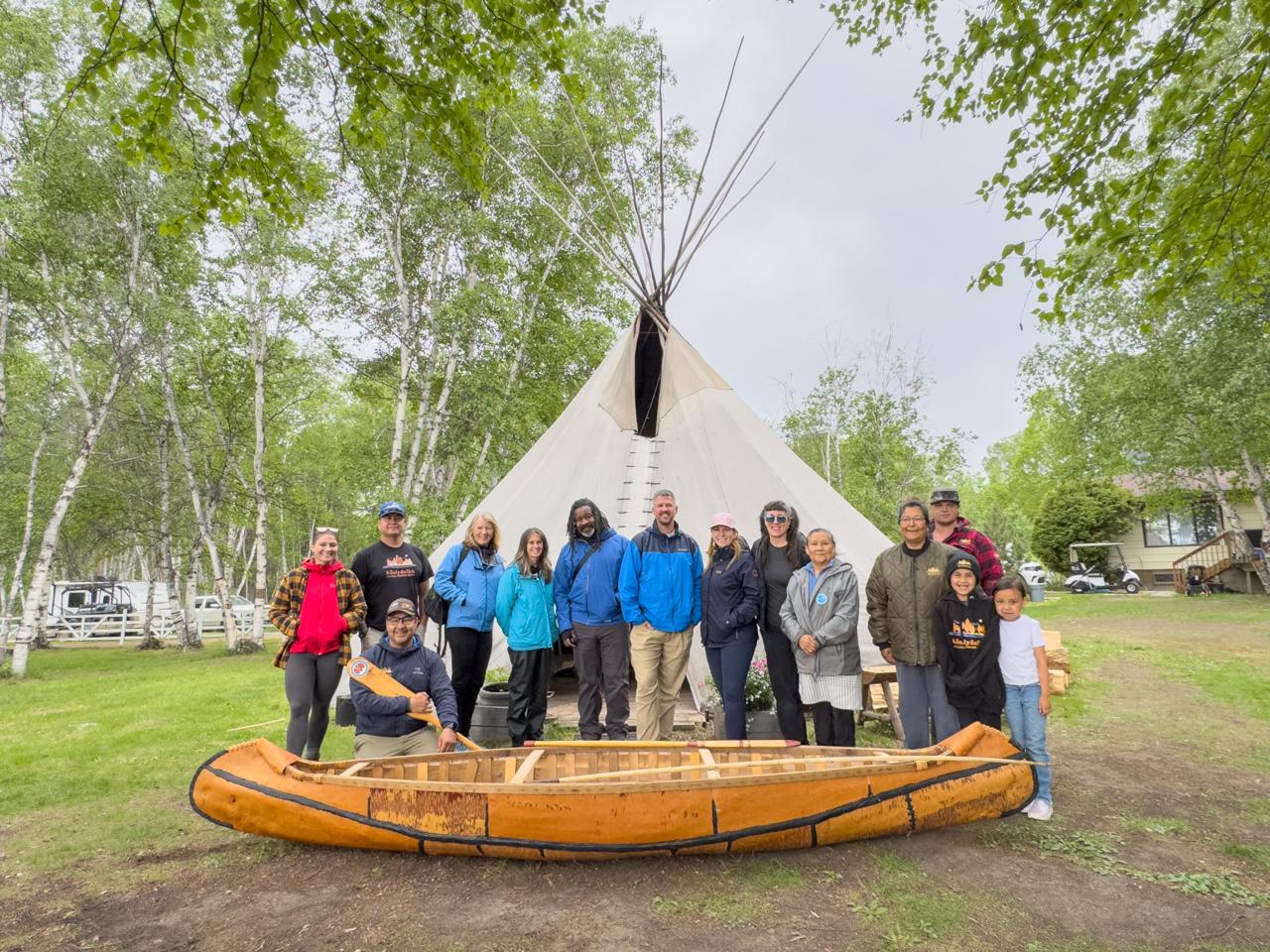
There’s an important movement happening in Canada, where indigenous teachings are not only being preserved, but also passed down to younger generations. We took a trip to a place near Saskatoon that does just that, and more.
The Cree are one of the largest First Nations groups in Canada. There are more than 350,000 Cree people, spread across the prairies, boreal forest, and subarctic regions. The land around Ministikwan Lake sits within Treaty 6 territory, where forest, water, and wildlife still shape daily life in very real ways.
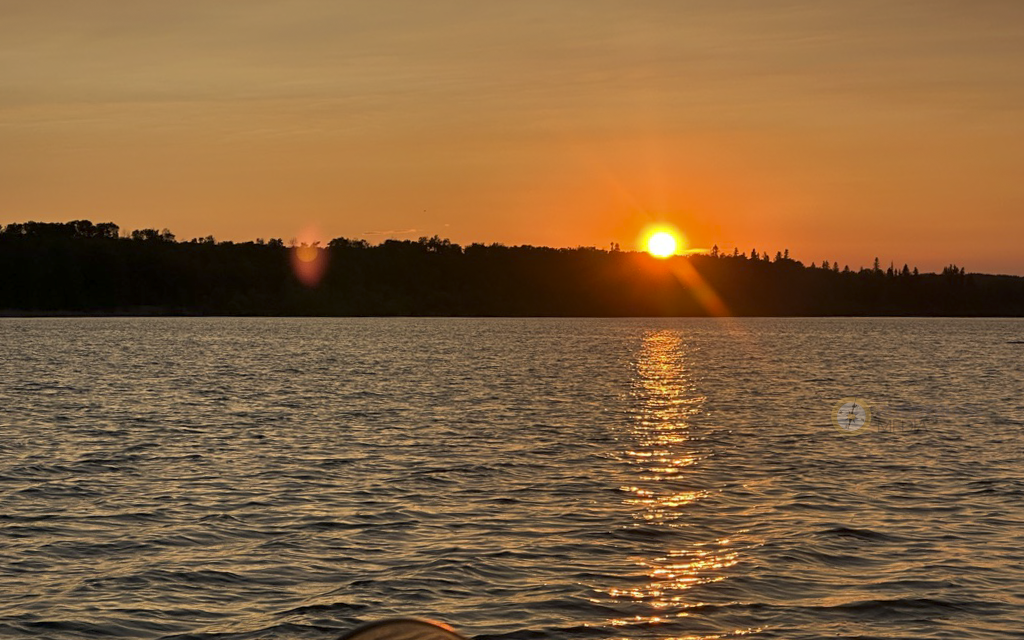
At Kâniyâsihk Culture Camps, in Saskatchewan that relationship with the land is a lived experience. The boreal forest sets the pace, the lake sets the food system, and everything you learn is tied back to how people have lived here for generations.
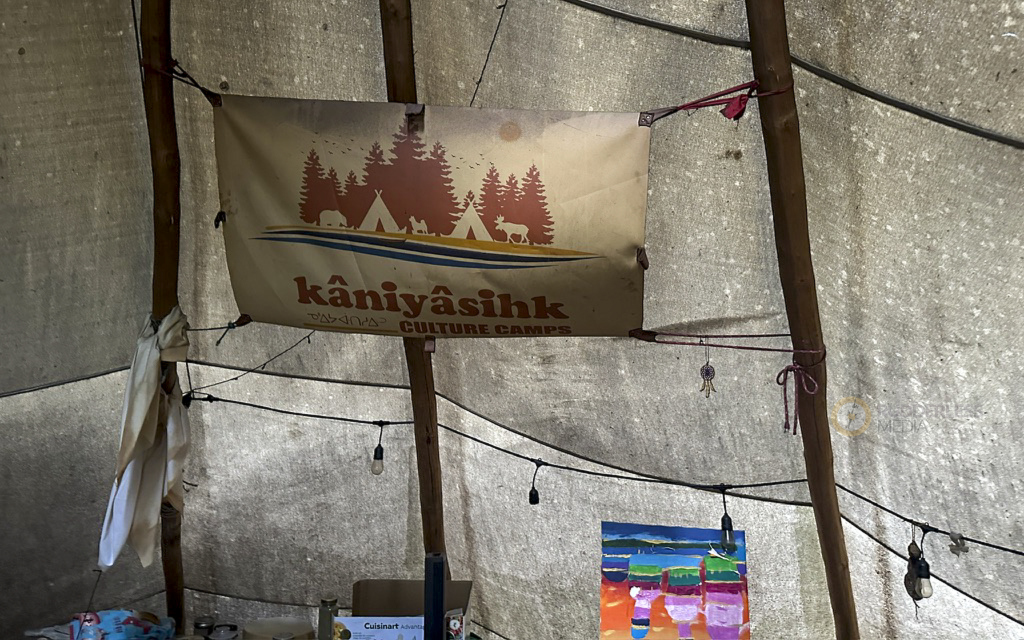
Visiting the Kâniyâsihk Culture Camps at Ministikwan Lake
The camp at Ministikwan Lake used to only offer seasonal programs, but you can now visit them all throughout the year. So, you just have to find yourself in Saskatchewan and travel about four hours north of Saskatoon, to find this welcoming space.
When you reach the deep end of the boreal forest, where the paved roads become gravel and you lose your last bar of cell signal, you’re in the right place.
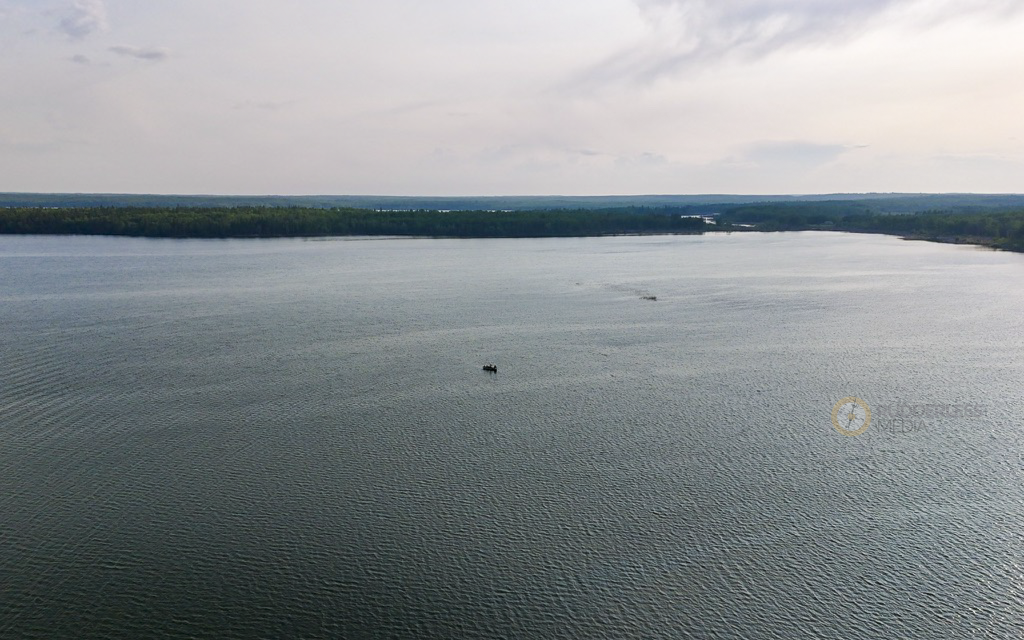
The camp itself is situated on the shores of Ministikwan Lake, in Treaty 6 territory. The entire area is made up of simple-looking cabins and outdoor cooking areas, with people roaming the spaces and looking very much at home.
A Camp Built Through Family and Teaching
The people who guide and teach at the camp are all intertwined. We spent a lot of time with Darla, who led many of the land-based teachings, and who is also the sister of Kevin Lewis, who started the camp alongside their mother. The whole family is deeply involved in shaping the space, and you feel that in the way everything is held and shared.
Learning Through Cree Traditions
As well as hearing the Cree language continuously while you’re here, you’re guided through practices that are still actively used and passed down within Cree communities today. These are ways of living that remain connected to land, food, and daily survival.
Take a look at how immersive this experience is in my Rudderless Travel Podcast episode below.
Fishing as Survival, Not Activity
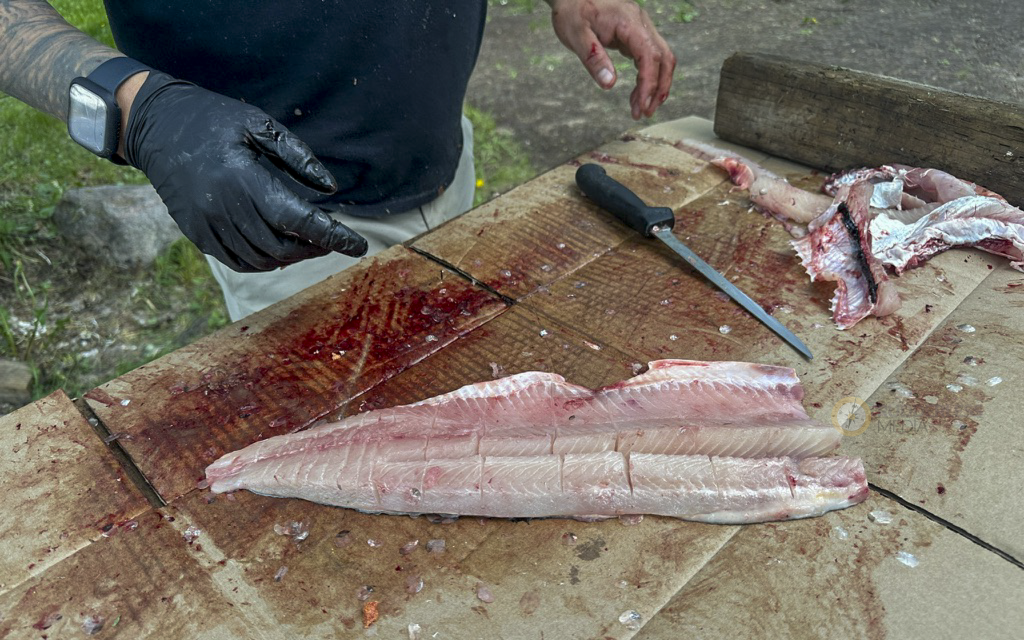
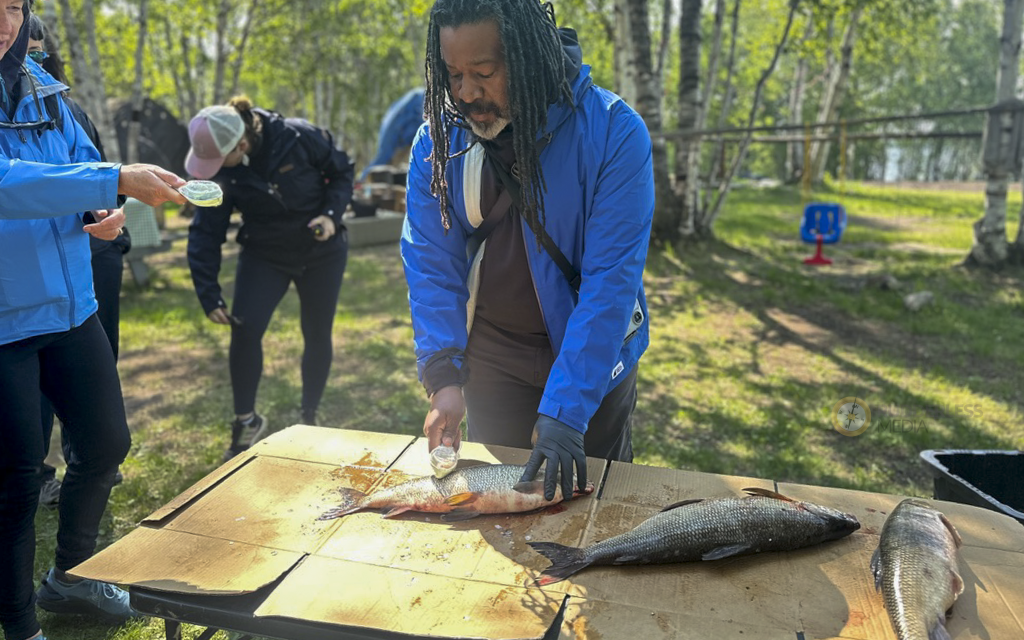
With such a large body of water at their disposal, the Cree have, of course, depended on this as one of their primary sources of food. So rather than being a leisure activity, here at the camp, fishing is a survival skill.
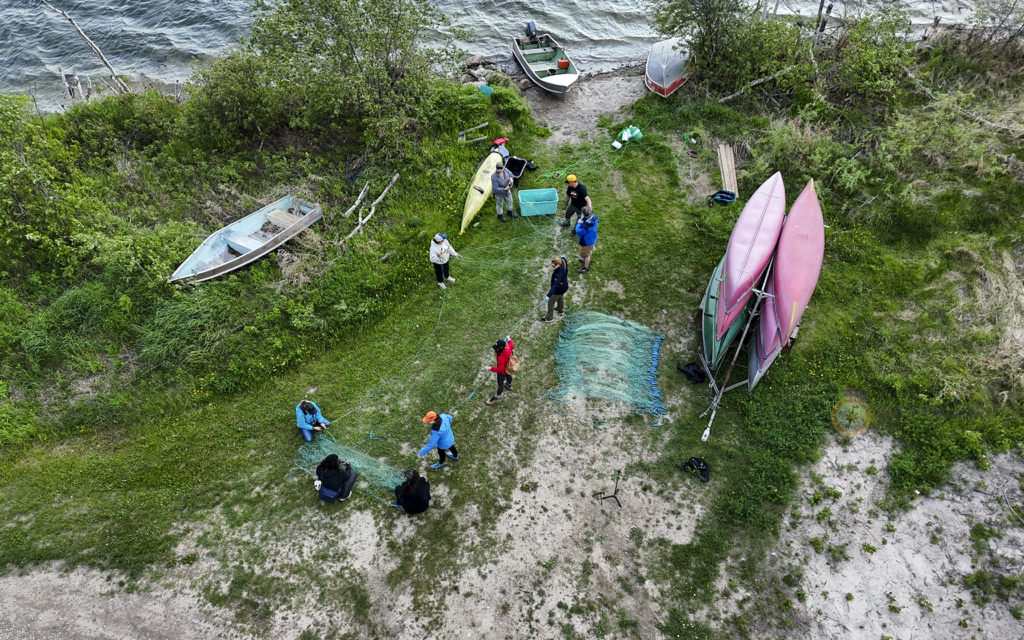
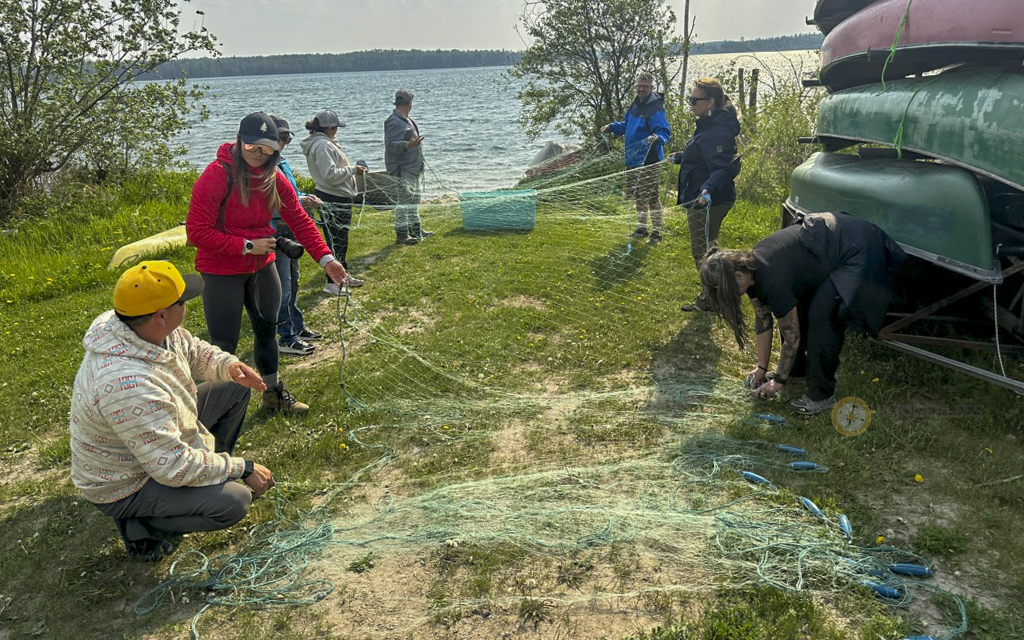
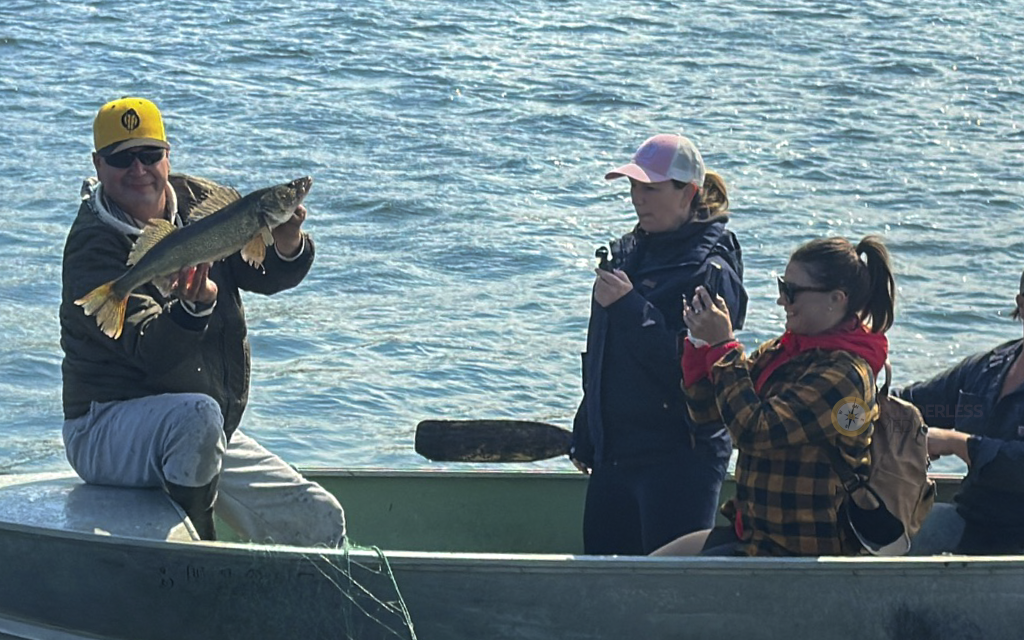
No hook at line fishing here. Instead, nets are dropped from boats and left in the water, to be fetched the next morning, when they’re filled with enough fish to feed the village.
Food, Shared and Prepared Together
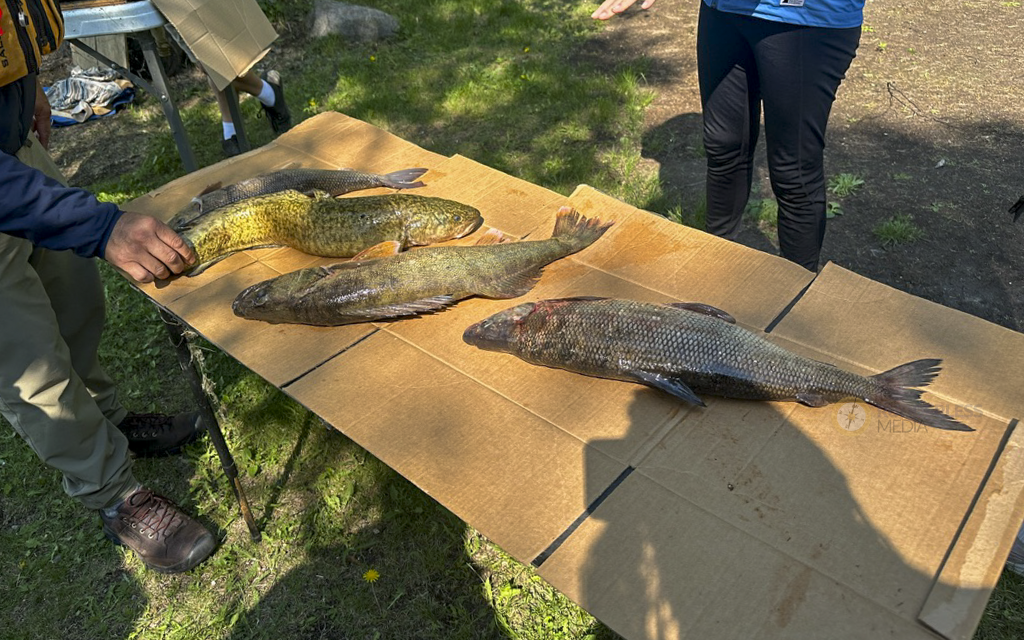
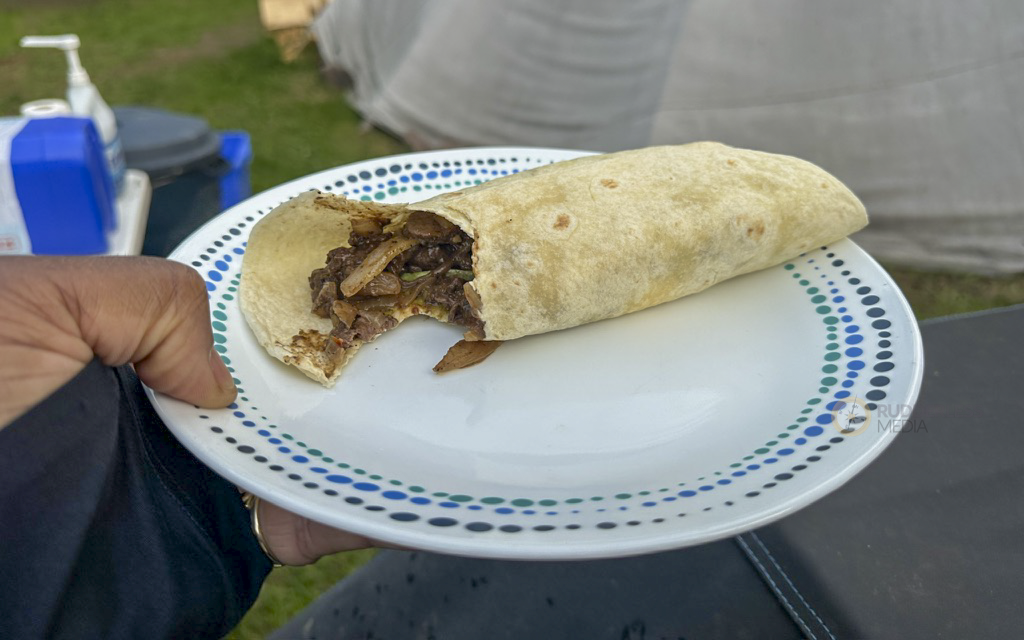
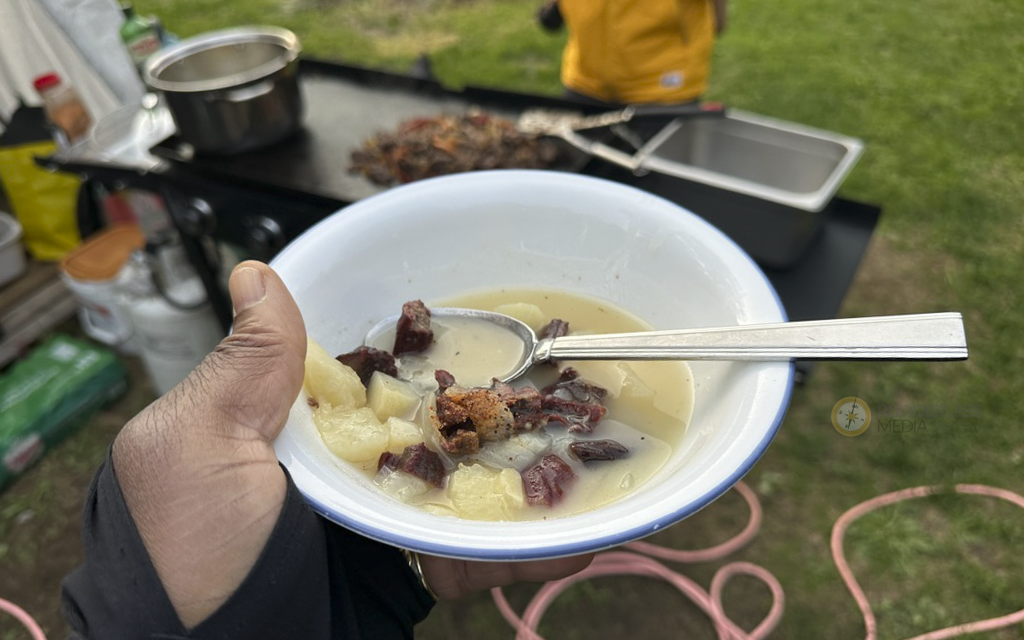
Food is a vital resource at Kâniyâsihk culture camp. Whether it’s the fish pulled from the lake, elk meat that’s hunted and shared, or fresh produce harvested, nothing is wasted and no one is left out.
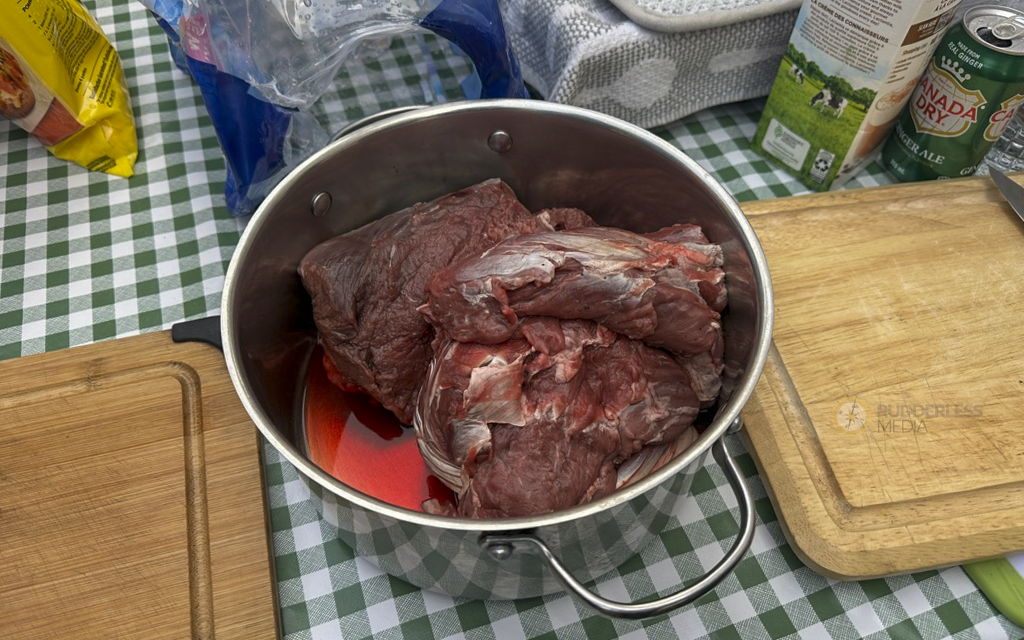
We saw this first hand when we took part in preparing elk meat for a shared meal, putting aside the hides for future tanning (which I’ll explain a little further down). And even when the fish came in, we saw how the scales and spines are used to make jewellery and the heads are used in stews.
Learning to Track Animals
Besides fishing, the Cree also hunt moose for food. So, being able to track these animals, and read their behaviour through footprints and other tracks, can often mean the difference between a successful hunt and going home empty-handed.
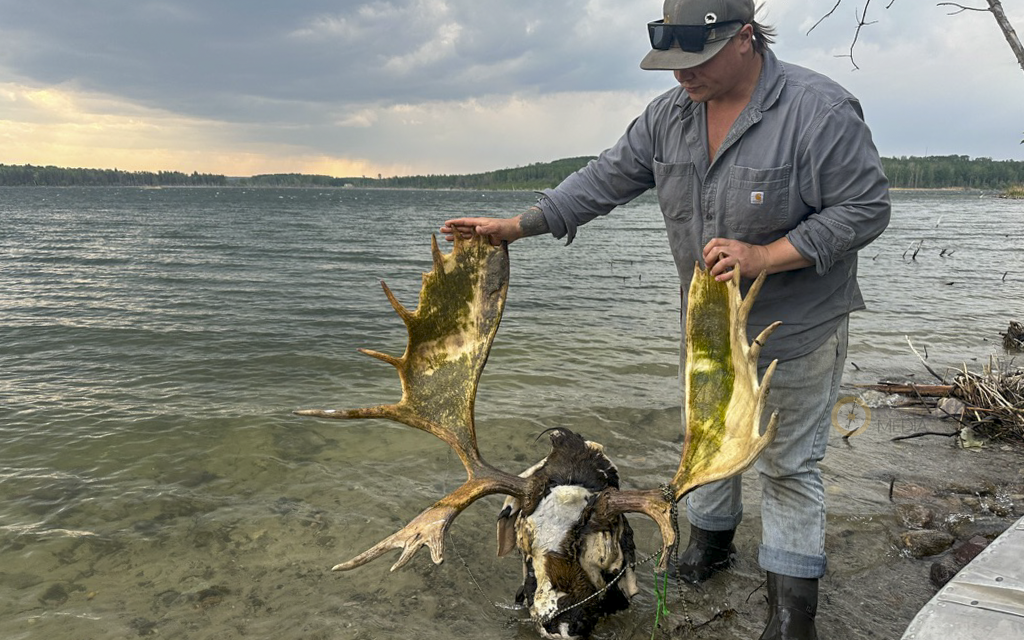
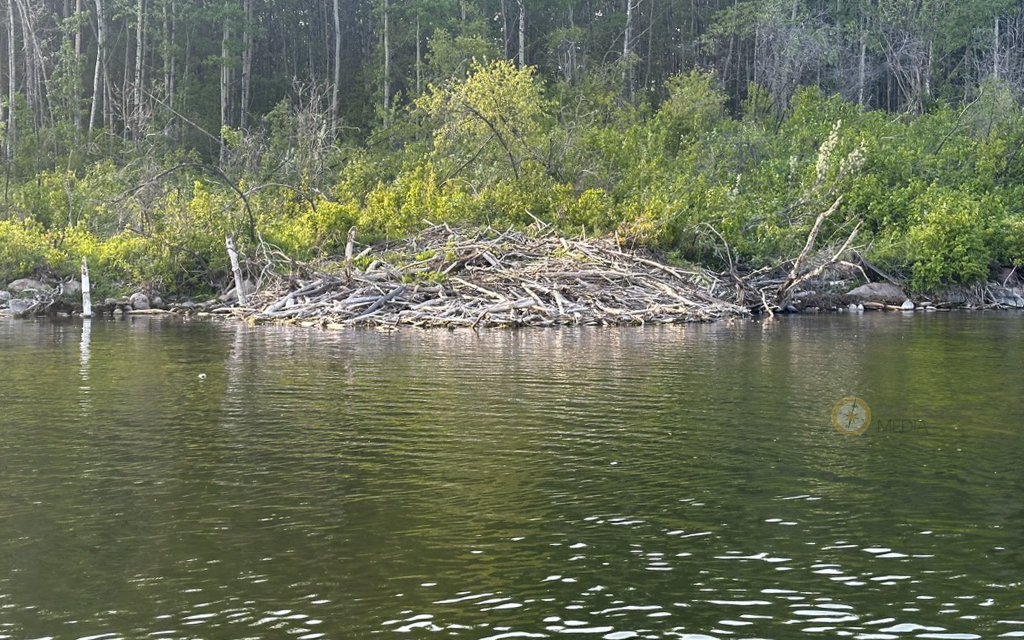
At the camp, newcomers and children are taught how to do this through a game, learning what moose urine smells like, and how to tell the difference between a bull and a cow’s prints. The beavers here are also a key part of that wider understanding of the land. Their dams change how water moves, which in turn affects where other animals feed, travel, and settle.
Traditional Hide Tanning
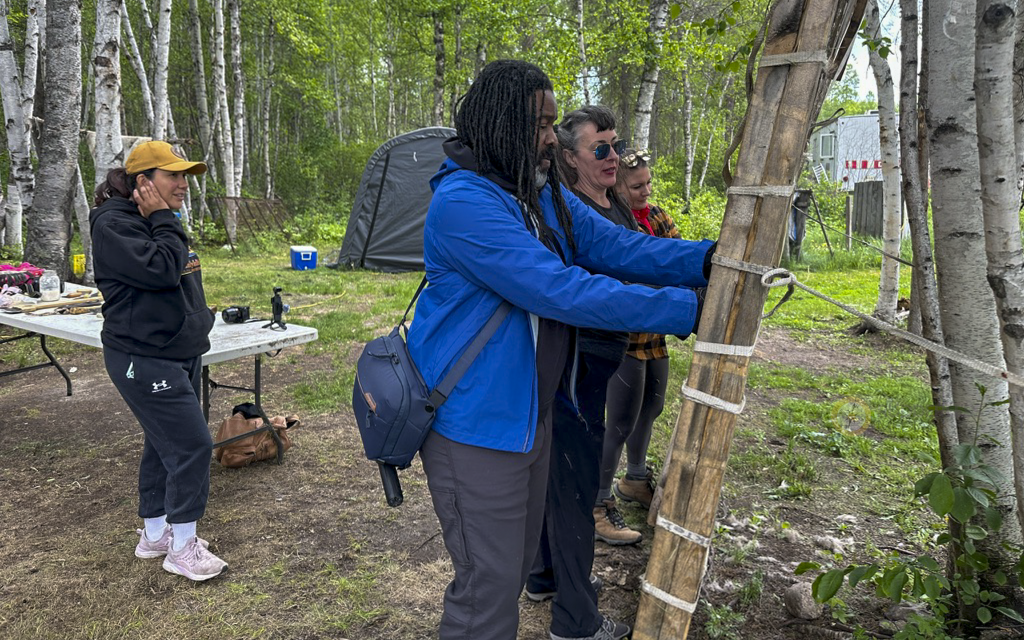
While at the camp, we learnt about the 13-step process to traditional hide tanning. Although, as our guide Darla explained, this can look very different depending on the region you’re in.
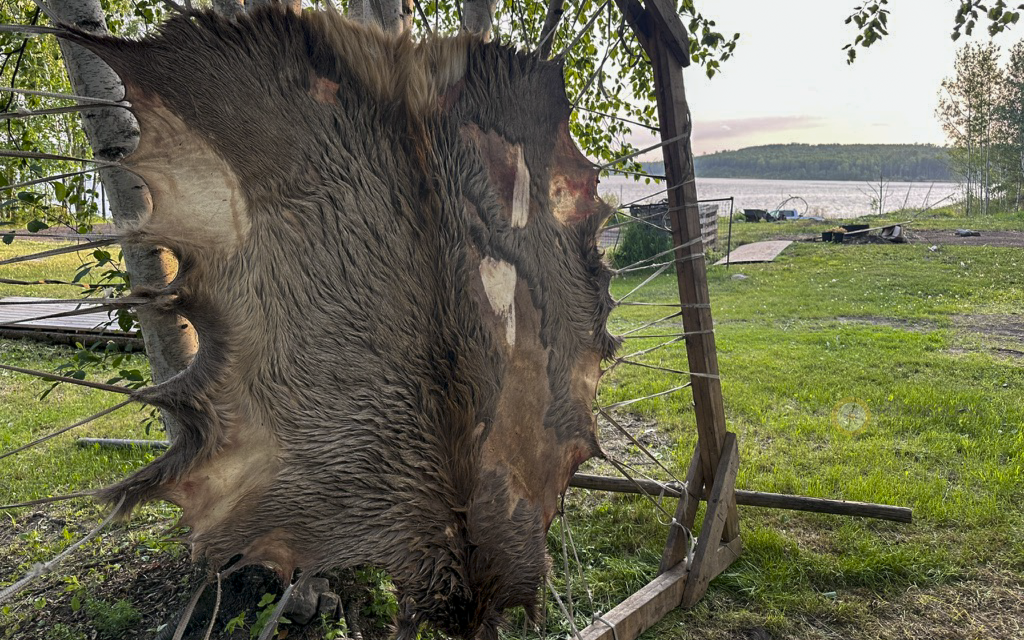
Essentially, it begins with skinning the animal and preparing the hide. Then you soak, stretch, flesh, and dry scrape to remove any excess tissue and thin the hide down. This all takes time, and energy (!), and it’s usually done in groups.
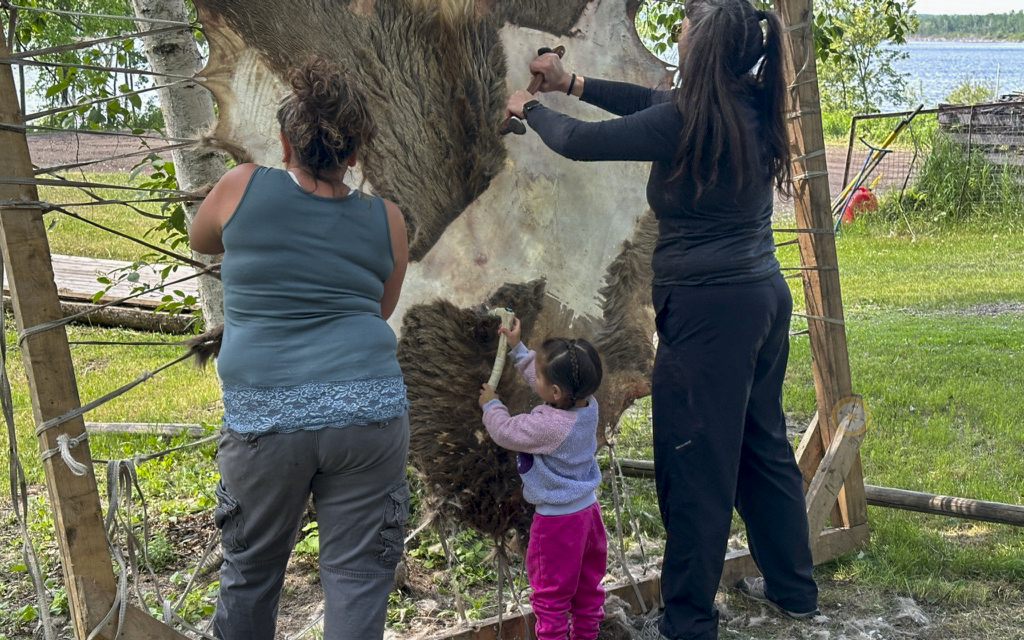
Afterwards, the animal’s own brain is used to treat and soften the hide. There’s a core purpose of using the whole animal (or as much as possible) with intention and respect.
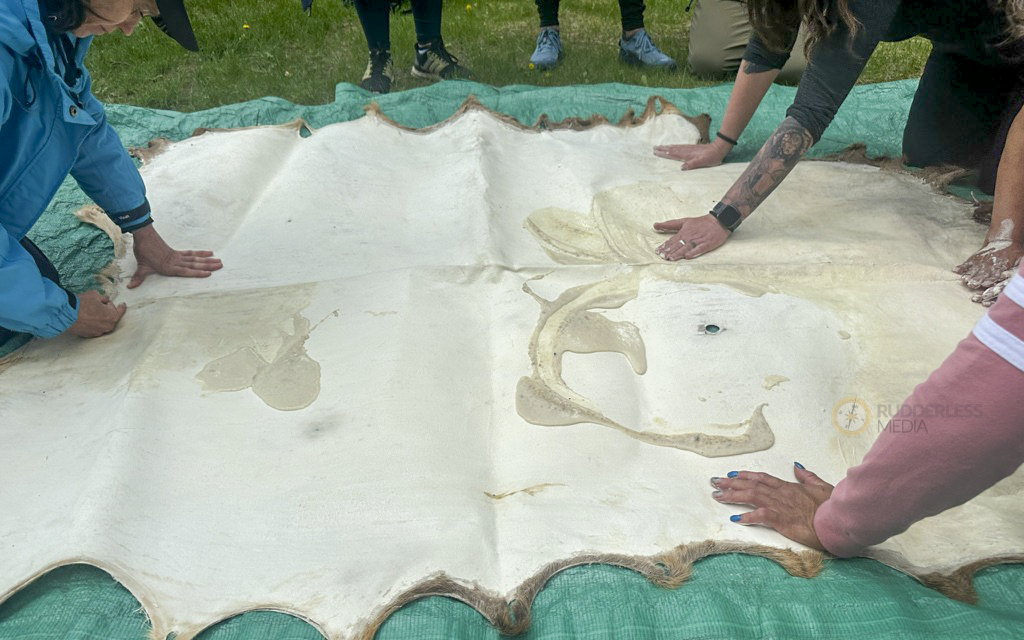
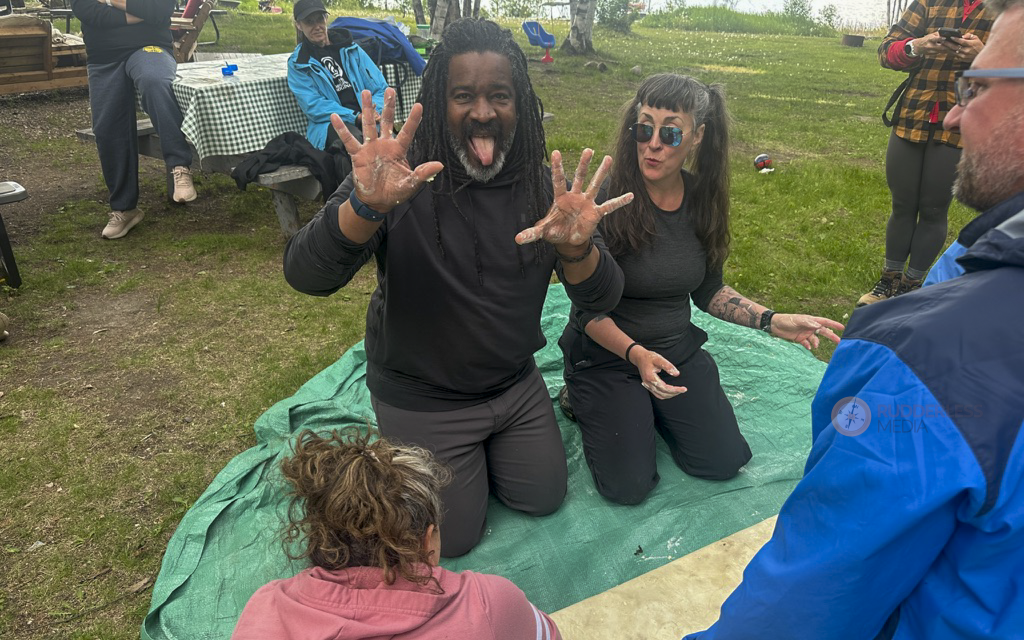
It’s good to note that this process often takes several days. So, unless you’re here for a week or more, you may only get to see a small part of it all.
Storytelling and Ceremony
At Kâniyâsihk, learning doesn’t sit in a textbook or get delivered as instruction. It moves through stories. You hear it while you’re there, in the place it actually happened, which is what makes it stick.
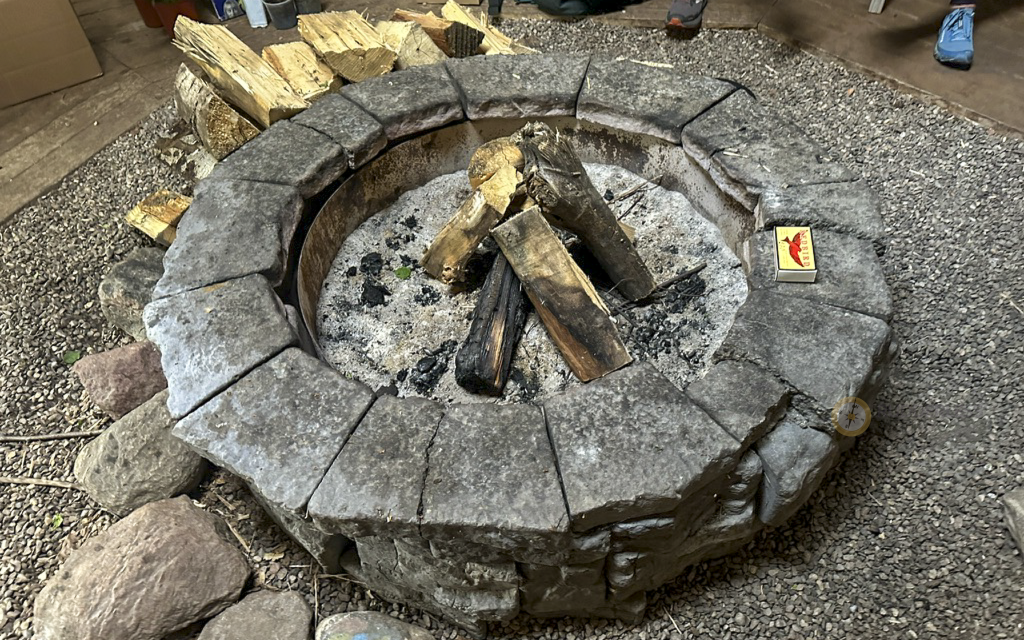
Take Potato Island. It’s not just a name on a map. It’s a reference point people use to teach direction, safety, and how to move through the land properly. Once you’ve heard the story there, you don’t really forget where you are in relation to it again.
Why Land-Based Learning Matters for Indigenous Communities
Land-based learning is continuity. It’s the difference between knowing about the land and being able to live with it.
For anyone sharing the land, it’s a reminder that this is not empty space or scenery. It’s a system that people are actively part of, whether they understand it or not. And once you’ve seen it up close, it becomes harder to unsee that connection.
For a different but connected example of Indigenous-led land-based learning, there’s Wanuskewin Heritage Park, where similar relationships between land, culture, and teaching are still actively maintained.
Not a Goodbye, Just Until Next Time
Leaving Kâniyâsihk brings you back into a very different rhythm. One that moves faster, feels more layered, and is easier to live in without thinking too much about where things come from.
What stays with you isn’t a single teaching or activity, but the way everything here is done with intention and in relationship to the land it depends on. Nothing exists on its own, and nothing is treated as separate from where it comes from.
Next time you’re spending a weekend in Saskatoon, or heading north for a road trip, I highly recommend spending some time here.
But for now, as the Cree say, Misawac Kawi Na’wapamitin (Until we meet again)




2 Comments